
Environment
“Environment” is an all-encompassing word: it can mean our immediate interior surroundings as well as the entire planetary system we operate in. In the context of this report, we limit the discussion to the impacts of Danzer’s activities from selecting raw materials to selling wooden material that will eventually enhance the spaces humanity lives, works, travels through, and recreates in.
Precautionary Approach
The Precautionary Principle states that, decision-makers should adopt precautionary measures when scientific evidence about an environmental or human health hazard is uncertain and the stakes are high. This is particularly important when considering potential impacts of the company’s activities on climate change. Danzer takes a precautionary approach to decision making and incorporates this principle into the Danzer Values and Code of Conduct, which guide investments in people, operations, supply chain, product development, and customer relationships.
Biodiversity
(GRI 3-3). Policies to halt/reverse biodiversity loss
(GRI 101-1). Danzer’s policy to only purchase wood (logs and trade products) that were harvested from sustainably managed forests (legal, deforestation free, and sustainably managed) means our due diligence system for procurement is robust. We require conditions of our suppliers that was updated to include the European Deforestation Regulation (EUDR) requirements in 2025 (Danzer General Purchase Conditions) and is subject to an in-house quality control program. This program created a structured approach for monitoring and ensuring compliance of suppliers to the Danzer General Purchase Conditions (GPC) through progressive sampling, supplier interviews, and mitigation of identified risks. It applies to all veneer log suppliers (approx. 300), lumber suppliers (approx. 100), and third-party sources (e.g., trade veneer) supplying logs or wood products to Danzer companies under the GPC.
Suppliers in high-risk areas are subject to a higher standard of due diligence in addition to the GPC and this QC procedure because, despite decades of effort by SFM certification schemes, studies show that the conservation status of tropical forests worldwide is worse than previously thought (GRI 101-7). Danzer maintains strict standards to avoid trade in species associated with risks of deforestation including illegality and fraud. This is a precautionary approach because we know that biodiversity is declining around the globe and many biodiversity hotspots still lack not only protection, but the initial species assessments to provide information necessary to that protection.
Management of biodiversity impacts
(GRI 101-2). Danzer does not manage its own forestland, but through sustainable forest management (SFM) certification programs, we rely on third party auditors to verify that SFM is taking place in the forests our logs and timber products originate. Sometimes, especially in regions where we might doubt the validity of an SFM certificate because of things like corruption levels or reports of chain-of-custody problems, Danzer conducts an additional level of scrutiny by qualified Danzer staff or contracted parties.
This management of biodiversity impacts through SFM certification schemes covers: access and benefit sharing (GRI 101-3), identification of biodiversity impacts (GRI 101-4), direct drivers of biodiversity loss (GRI 101-6), monitoring changes to the state of biodiversity (GRI 101-7), and cataloging ecosystem services (GRI 101-8). Procurement Practices (GRI 204, 3-3) at Danzer they are described in detail here.
Proportion of spending on local suppliers
(GRI 204-1). Danzer buys the majority of logs “locally” (within 800 km, though most of those are within a smaller radius) and this activity supports those local forest community economies and employs local loggers, foresters, road builders, and truck drivers. Sustainable forest management (SFM) promotes healthy, resilient forests and biodiversity thrives because of this economic activity, while the natural water cycle is maintained. Sourcing products certified to a sustainable forest management system promotes these communities all around us and the broader world community when one considers climate change and the carbon sequestration benefits of wood products and side-streams.
Local purchases represent approximately 78% of Danzer’s timber and timber product sales. The remaining sales 22% consists of specialty logs, veneers, lumber and finished products that are not local to their point of production or point of sale. Supplier environmental assessment (GRI 308-1/2/3, 403-7, 414)
Materials
(GRI 301-1/2/3). Danzer produced 93,010 m3 of raw material in 2025. Danzer does not use recycled input materials or reclaimed products since this only makes sense for downstream products. Danzer is at the beginning of the circular economic cycle, producing a natural resource that will eventually be reused, reclaimed, recycled or used as an energy source. Packaging materials are reclaimed between Danzer production and warehouse sites to the extent possible.
Energy

(GRI 3-3). Danzer’s approach to the energy topic is to: first conserve by maximizing both reduction and efficiencies, and secondly generate as much renewable energy as possible.
Energy consumption within the organization (302-1)
Renewable fuel: Heat for production at primary veneer and lumber operations is generated by the primary source: wood fuel that is a byproduct of our own operations or locally purchased by product. No virgin material is used for heat production. Secondary fuels for veneer production can include natural gas and fuel oil. Danzer operations reduced natural gas consumption for production by 71% and fuel oil by 99.7% in 2025 by focusing on purchasing more wood fuel from other sources.
Renewable energy: Danzer’s operations in Melnik, Czech Republic increased solar energy production by 3.1% over last year. Solar projects at other locations are still in various stages of evaluation. Electricity from the public grid however, is increasingly renewable: even 100% for the location in Kesselsdorf, Germany. According to the US Energy Information Administration, Pennsylvania's electricity is primarily generated from natural gas (approx. 50-60%) and nuclear power (approx. 30-40%), making up the vast majority of the state's energy mix. Coal, once the dominant source, has declined to less than 10%, while renewable sources—mainly wind and hydropower—provide around 4-5%. Indiana's electricity is primarily generated from coal and natural gas, which together account for over 75% of the state's total generation as of 2024–2025. While coal has historically been the dominant source (declining to ~41–42%), natural gas has increased to roughly 35–40%. Renewable sources, mainly wind and solar, make up roughly 15%.
Energy Intensity (GRI 302-3) expressed in MMBtu/m3 of wood produced and used for energy at the major veneer production operations is as follows: 4.52 in Melnik, 13.26 in Edinburgh, and 26.83 in Williamsport.
Reduction of total energy consumption (GRI 302-4) from the public electricity grid was not achieved as an overall figure in 2025, but the increase of 2.7% corresponds favorably with an overall increase in production of 8.8%.
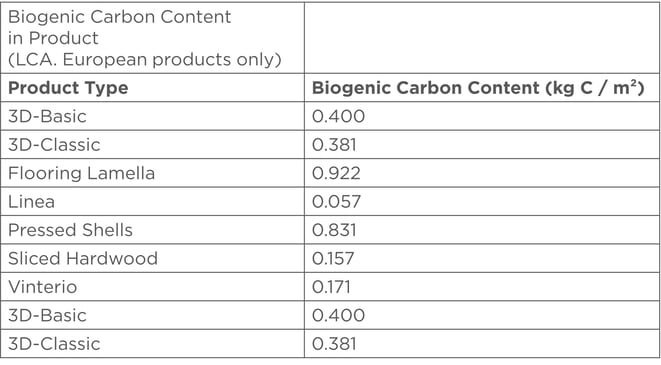
Energy consumption outside of the organization (GRI 302-2) is being assessed by an outside consulting firm in 2025-2026 to help Danzer establish SBTi-aligned climate targets based on a comprehensive Greenhouse Gas (GHG) inventory. All upstream (from harvest to factory gate) Scope 3 carbon emissions from energy consumption are accounted for in Danzer’s Environmental Product Declarations (EPDs). These are available for Danzer’s European production since 2024 and will be available for US production in 2026.
Pollution Prevention
Air Resources
(GRI 305-1-7, GRI 3-3). Danzer facilities’ Greenhouse Gas (GHG) emissions are, as stated in the section “Energy” calculated on a per m3 production basis, every 5 years upon the renewal of the EPDs. These calculations include direct (scope 1), indirect energy emissions (scope 2), and other indirect emissions (scope 3) up to the gate, but as explained under “energy” will be calculated for the GHG inventory and SBTi-aligned climate targets in 2026.
Other controlled emissions (SOx, NOx, particulate matter) are measured and/or calculated at manufacturing locations according to the requirements of the air permitting regime in place under the local regulatory framework. It is not possible to consolidate this information in a meaningful way across Danzer given different parameters, measuring techniques and, especially, reporting cycles.
Water Resources
(GRI 303-1-5, GRI 3-3). Water is a shared resource (GRI 303-1) and compliance with local regulations is a minimum to protect the communities Danzer operates in. Therefore, several projects are installed, in progress and being investigated to recycle, reduce pollutant loading, and reuse water from both municipal and natural (groundwater) sources.
In 2025, more than one Danzer facility experienced problems with water meters or pumps so that our water withdrawal, discharge and consumption data is not accurate. We are sorting through these reporting problems and will resolve the 2025 numbers in the course of the 2026 reporting for a more accurate worldwide picture.
The Melnik facility recycles its process water and reuses the effluent. An upcoming project there is to capture rainwater, possibly for use as process water, but also to return it to aquifer instead of discharging it directly to the river.
In response to color concerns at the local wastewater treatment facility, the Edinburgh facility thoroughly evaluated an innovative Environmental Treatment System, which is a kind of enclosed artificial wetland, for treating its vat water. The first phase of this project will start in 2026, with the goal to meet not only minimum color standards for the Town of Edinburgh, but to reuse the water in a closed system. Phase II would include any adjustments to make the system closed-loop. A third phase, for the future might include recycling of the log yard wet-decking system discharge.
Land Resources
are impacted directly and indirectly by the resources we use. For an example of direct impact, see tree harvesting in the “Biodiversity” section of this report. Another example of direct impact is the municipal-like waste generated (typical cafeteria waste and packaging) that ends up in a landfill. Chemical waste and mixed solid waste (for example material from oil spill clean-up) must be handled by specialized contractors to ensure that it is either treated, incinerated, or disposed of at a special landfill. Secondary impacts result from these disposal solutions.
(GRI 306-1-5) Danzer’s material inputs are primarily wood and water however, the boiler operations, maintenance activities, gluing and cleaning operations can lead to special waste streams like ash, used oil, glue/water waste, and solvents. Chemicals are limited to boiler chemicals (i.e. detergents, softeners, and soda), maintenance chemicals (i.e. paints, solvents, degreasing agents, oil, grease, lubricants) as well as specialty production materials (i.e. glues with and without formaldehyde, cleaning solutions, lacquers). The facilities are careful to label these materials and chemicals in their use and disposal phases. Waste is managed by trained individuals according to local disposal regulations.
Most paper and cardboard packaging is recycled locally. Plastic packaging waste, from incoming materials, our own inter-company transfer packaging and banding, and banding and packaging of the final products. Danzer identified plastic waste as the waste impact we could influence the most so Danzer started the Zero (0) Plastic OKR team to target reductions. The team saw much success in 2025. Creative solutions like reusable tarps for walnut veneer staging, total recycling of plastic banding, and thinner, recycled content plastic film helped the organization collectively achieve a 25% reduction of plastic / m3. Reported overall plastic use reductions at individual facilities looked like this:
-81% KES
-61% ME
-30+% EDI
-30% GRÖ
On top of the plastic reduction, due in part to better recycling, municipal trash across Danzer operations was reduced by 1.9% (weight).
Product End-of-Life (GRI 417-1-3) was analyzed and estimated and explained in the Life Cycle Assessment for all Danzer products, which was then summarized in the EPDs for each product in Europe, upcoming in 2026 for USA products. These EPDs are available for all customers upon request.
Customer Health and Product Safety
(GRI 416-1, GRI 3-3). Product safety and customer health are important to Danzer. We are proud that Danzer’s veneer and lumber are natural products and do not contain additives. Any formaldehyde, a recognized naturally occurring emission from some wood species, is well below regulatory limits and/or undetectable. Spliced faces, Vinterio and Linea products use glues, but any formaldehyde in the glue is also below reporting levels. Special products with glue are being tested in 2026 to make sure they conform to European REACH standards, which will come into effect in August. Danzer is also testing to confirm compliance with the US TSCA limits and California’s Proposition 65 emissions threshold for formaldehyde.
All of Danzer’s wood products have the potential of producing wood dust during further processing, especially sanding or cutting. Danzer’s Safety Data Sheet for wood dust was updated in North America in 2017 and is available here for downstream employers.