
About Danzer
(GRI 2-1, 2-2, 2-6)
Founded in 1932, Danzer is a family-oriented company, managed by a member of the third generation. Danzer produces sliced veneer, lumber and innovative value-added wood products for decorative applications in high-quality furniture, automobiles, and interior architecture.
_175x112.jpg)
Organization
Governance
Policies
Senior Management Engagement
(COP G-1, GRI 2-12, 13,14, 17, 18, 19, 20, 21, 22, 23, 24). Accountability is important from the Board of Directors to the first partner in the Danzer supply chain and back again. We prefer that sustainability targets and criteria are developed by the teams whose work influences the material topic the most. Our Sustainability and Compliance team works with professionals from IT, Engineering, Maintenance, Production, Procurement, Sales, Administration, Accounting and Finance, and Human Resources to develop meaningful targets and report on criteria. Executive Board members are sometimes directly involved in the development process but always engaged in the decision making on what the targets are and the means of achieving them. The Danzer Board of Directors receive sustainability reports from the Executive Board members and are asked for input and/or approval at their 4x per year meetings as necessary or appropriate. The reporting process is governed by the Sustainability and Compliance Counsel at Danzer AG, who reports to the Chief Finance Officer. Danzer’s CEO makes a personal statement to stakeholders at the forward of this report as well as completing the obligatory CEO statement portion of the COP.
Due Diligence
Compliance with laws and regulations
(GRI 2-27). When it comes to sustainability topics, Danzer’s commitment to compliance with laws and regulations dates to 1994, when the factory in Edinburgh, Indiana hired the first environmental engineer in the industry to build an Environmental and Safety Management System. That system, in place in every operation within the Danzer organization today, was based on the early drafts of ISO14001:1996.
In 2026, the Executive Board approved adding 100% Compliance to its sustainability Objectives and Key Results (OKR). Such an aspirational objective (100% compliance with every detail of every law is very ambitious), all Danzer employees know the importance of working responsibly and lawfully. The double-materiality matrix, which meticulously evaluates all sustainability topics according to severity and likelihood (see section Materiality) will be used to rank all compliance topics on the same material matrix. Danzer’s Sustainability and Compliance (S&C) team leaders can then focus their resources on the critical elements in the upper right corner of the matrix: where potential severity and likelihood are highest.
The Key Results of the 100% Compliance Objective are then, specific, time-bound, and aggressive, yet realistic and measurable/verifiable. In this way, the S&C team, and all Danzer colleagues can rest easily, knowing they are putting their hard work into the issues that will have the biggest impact on employee safety and environmental protection.
Stakeholder Engagement
(GRI 2-29). Danzer’s stakeholders play a critical role in helping us live up to our Mission and Values, and the Danzer Code of Conduct. Stakeholder concerns help us stay agile: adjusting our strategy to accommodate changing technology, community concerns, product requirements, and legislation. As a part of this reporting process, Danzer reaches out for feedback from all stakeholders, including employees, customers, suppliers, lenders, communities, regulators, board members, and NGOs. The recent simplification of the Code of Conduct with employee explanations is an example of this responsiveness.
Communication of critical concerns
(GRI 2-16, 26). Every Danzer location maintains a Communication Protocol specific to that site. It spells out how any message received from an employee, customer, supplier, community member, government agent, auditor, employee family member, or NGO should be dealt with: who should respond, in which format, who should be informed, and how the record is maintained.
Within the Danzer organization, critical information from management is delegated to Executive Board members to communicate in the most efficient manner to key leaders according to the organizational structure.
At the local level as well, the most effective communication given the audience and circumstances is chosen on a case-by-case basis. Danzer strives to be more-and-more proactive with message boards in the factories, posters, videos, social media posts, and ever improving training materials.
Conflicts of interest
(GRI 2-15). Corporate governance at Danzer works so that no one in the family, supervisory functions or management has any equity stakes in the company or financial interests that would contradict the long-term survival of the company. Everyone with a supervisory function at Danzer is independent: they have no connection to or dependency on the company’s success or lack thereof.
Memberships, Associations, Leadership roles
(GRI 2-28). Danzer fully supports the Wood 4 Real Coalition, whose mission is to make sure that EU consumers are informed correctly about the true nature of the wood products they purchase. Danzer organizes consulting activities and coalition contributions. Danzer contributed €105,000 in 2025 alongside contributions from individuals, organizations, and associations (€44,050) who believe that wood is the material of the past, present, and future because it is a sustainable resource and carbon sink that makes our living and working spaces healthier.
Danzer companies are also members in organizations that may also lobby in the general interest of the industry: the Decorative Hardwood Association (US), Timber Development UK, the European Parquet Federation, and the Spanish Chamber of Commerce.
Risk Management at Danzer is about taking a pragmatic, practical, realistic approach: pragmatic because we have to focus on results to make progress, practical because we have to apply ideals to our actual situation, and realistic because we know we cannot do everything all at once. We use matrices for risk management in the sustainability field at Danzer to prioritize all activities that are both highly likely and have a high severity: whether from inside-to-outside or outside-to-inside; whether the impact is financial or physical. For a hypothetical, if an exotic wood specie were to suddenly become popular but the procurement region was becoming more-and-more risky for deforestation, the outside-to-inside risk for involvement in corruption, illegality and deforestation would drive mitigation actions like purchasing bans, supplier audits, and certification mandates.
Materiality Process
(GRI 3), (GRI 3-1). A double materiality assessment completed in 2015 evaluated all Danzer activities and business relationships and took into consideration all products, significant markets and customer groups and other stakeholders. This process has been updated for this report. You can find an explanation of the process here Danzer Sustainability Report 2023.
List of material topics
(GRI 3-2). A sustainability matter meets the criterion of double materiality if it is material from the impact perspective or the financial perspective or both. Danzer’s material topics that have both severe consequences and are likely to occur are the focus of Danzer’s Objectives and Key Results (OKRs) in this section. Key Results are presented here. A full table of the materiality analysis is found here.
Management of material topics and Remediation of negative impacts
(GRI 3-3), (GRI 2-25). Danzer chose to use the OKR method to address the most material issues (the upper right quadrant on the severity vs. likelihood matrix) because it helps Danzer colleagues focus their attention on the most important matters: we set aspirational objectives (“O”) and set timebound realistic key results (“KR”) for the teams to achieve. Experienced colleagues from relevant Danzer locations are represented on the teams and their OKR results are reported to the Executive Board on a quarterly basis. The Executive Board is responsible for prioritizing time and financial investments to achieve the Key Results.
Economic Performance
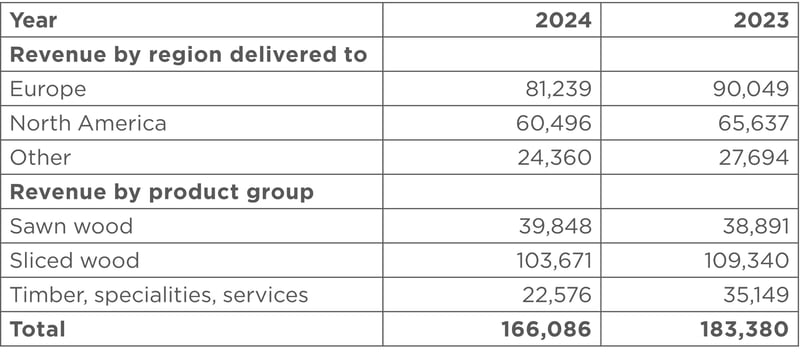
(GRI only GRI 201). Direct economic value generated and distributed
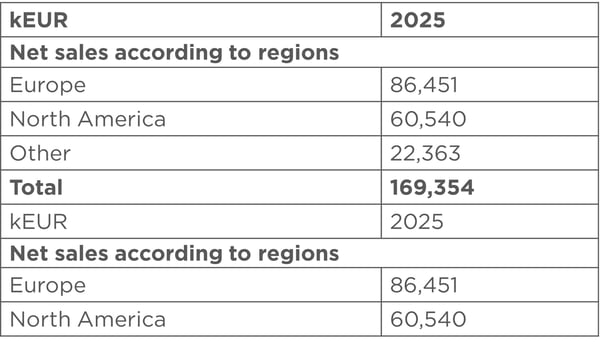
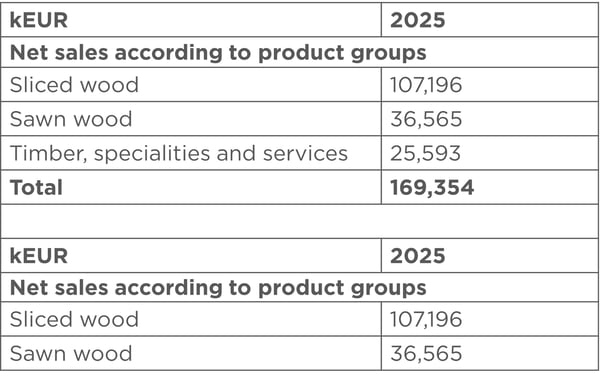
(GRI 201-1). Sustainable growth means more than profit — it means progress without compromise. At Danzer, we are committed to ensure that economic growth does not come at the expense of the environment and communities. The table below offers a clear view of the direct monetary value Danzer contributes to local economies — a reflection of our broader commitment to responsible, inclusive growth.
Financial implications and other risks and opportunities due to climate change
(GRI 201-2). Danzer recognizes that wood is an important, even critical, part of the solution to carbon-emissions climate change: by making forests more valuable through wood products that sequester carbon for decades (if not centuries), the forests stay intact to sequester carbon (in the forms of carbon dioxide through photosynthesis and methane through the soil) for millennia.
Since Danzer engaged with sustainable forest management chain-of-custody certification systems in 2007, we have realized a significant opportunity with customers: our customers appreciate that we do what we promise and prove it through third party certification. The same is true of Danzer’s commitment to comply with the European Deforestation Regulation (EUDR), enacted with the aim to stop deforestation, a major contributor to climate change both from an emissions and a removals standpoint. Our customers show their appreciation and this is a financial opportunity for Danzer.
On another note, as noted in past reports, forests are suffering from the effects of climate change: drought, pest infestation and resulting fires. This will create shortages, quality limitations, and drive prices up. By committing to sustainable forest management and working closely with our suppliers to ensure no deforestation, Danzer contributes to resilient forests that can withstand these threats.